
French Open Retains Line Judges- How Does This Affect Future of Tennis?
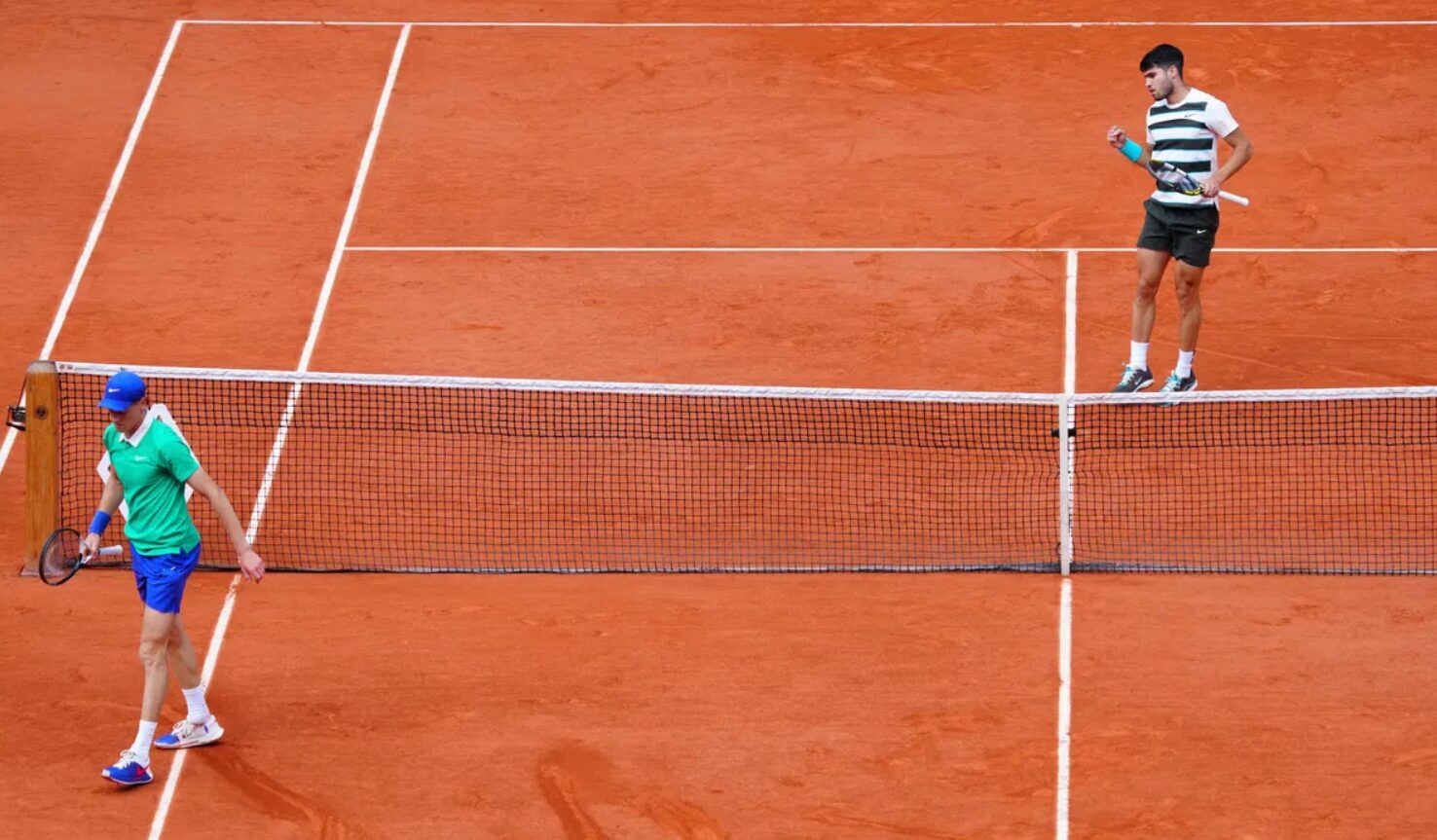
Roland Garros has always been about tradition. From the red clay that stains socks and shoes to the echoes of history that follow every step on Court Philippe-Chatrier, the French Open prides itself on preserving tennis’ soul. In an age where technology is rapidly replacing human touch, the tournament’s latest decision speaks louder than ever—line judges are here to stay!
Picture the scene: it’s a tense fifth set. The crowd is hushed, every heartbeat aligned with the ball bouncing across the court. Suddenly, the familiar call—’Out’—rings through the stadium. The players freeze, the crowd erupts, and drama unfolds. That moment, so deeply woven into tennis culture, is what Roland Garros refuses to let vanish. If we take a look at the other major tournaments, the Australian Open adopted Electronic Line Calling (ELC) in 2021, while the US Open adopted it in 2022 after using it on some courts in 2020. This year, even Wimbledon broke its 148-year-old tradition and replaced line judges with electronic line-calling created by Hawk-Eye.
It has been used on all courts during ATP Tour events since the beginning of 2025, while the WTA Tour has also implemented it at an increasing number of events. But the French Open organizers argue that clay presents unique conditions—marks left on the surface by the ball provide a visible reference, making human judgment more reliable than cameras or electronic sensors. Here, we often see umpires and line judges stepping down from their seats to inspect the mark directly in disputes, and this has always been a tradition here at Roland Garros. As per the latest updates, the French Tennis Federation has now confirmed that the line judges will still be present at the 2026 edition. They’re not going to implement ELC!
The French Tennis Federation (FFT) President, Gilles Moretton, said, “We are a federation where umpires and line judges work every day, and I say this with all humility, we are the best country for providing officials on the tour. We take pride in this; we have a strong training system. We are a benchmark, and we want to stay that way.”
He further added, “The federation’s will is to keep line judges as long as possible; right now, the players are driving the train. If one day they unanimously say: ‘We won’t play without the machine,’ we’ll see… But I believe we have a bright future ahead to preserve this officiating pyramid.”
If we take a look back at the previous edition, in this season, 404 match officials were present, including 284 French representatives from all French leagues. These umpires and line judges are rigorously selected from around 30,000 officials in France, who officiate year-round across various leagues, departmental committees, and FFT-affiliated clubs. The Federation believes that its officials represent more than simple accuracy; they form the backbone of a pyramid that sustains both grassroots and elite competition.
But the choice isn’t just romantic—it’s polarizing. Proponents of Hawk-Eye Live and electronic line calling argue that accuracy must triumph over sentiment. Human error, after all, has shaped history in both glorious and controversial ways. A wrong call can shatter a career-defining moment. Technology, they say, eliminates that risk and ensures fairness. During the 2025 French Open, there was a moment when we saw Novak Djokovic expressing his frustrations towards the chair umpire as he contested a close line call during his SF match against Jannik Sinner. Then, even in the final between Sinner and Alcaraz, there was a similar moment. But neither the human line judges nor the Electronic Line Calling system is absolutely flawless. There have been various such controversial moments surrounding ELC as well! Let’s take a look at some of those moments from recent times.
Controversial moments in tennis surrounding the line calling in 2025
During the 2025 Stuttgart Open, the current world number one, Aryna Sabalenka, was handed a warning for taking a picture during a match as she was not happy with the line call, and the chair umpire refused to overturn the decision. Even her compatriot, Victoria Azarenka, did a similar thing during one of her matches at the Madrid Open. On the men’s side, Alexander Zverev was also seen taking a picture of the mark left by the ball, following a controversial call at the Madrid Open this year.
But it’s not just about clay! Even at Wimbledon (despite having ELC), there were plenty of controversies this year. The most controversial moment of the 2025 Wimbledon Championships was when a system malfunction resulted in technology being switched off for a game during Anastasia Pavlyuchenkova’s match against Sonay Kartal. This thing became more apparent when a shot from the Brit landed way beyond the baseline without being ruled out. The game was paused instantly, but reacting to this, Pavlyuchenkova said, “You took the game away from me... they stole the game from me. They stole it,” to the chair umpire.
Then, in another instance, the technology endured a further malfunction during the QF match between Taylor Fritz and Karen Khachanov. A call of ‘fault’ was incorrectly announced after the American’s forehand landed inside the baseline. Not only Fritz, but even his compatriot Ben Shelton witnessed a bizarre incident in his second-round match against Rinky Hijikata. The match had to be suspended at the very last moment because it was too dark for the Hawkeye to work.
Commenting on that particular incident and sharing his thoughts about this debate, Ben Shelton said, “If the umpires were still there and we could play one more game, it’s possible, right? But I mean, tennis is kind of going away from that. I don’t think the Hawkeye system’s perfect. I think you know, we’ve seen that at earlier tournaments in the year, you know, players taking pictures of marks on the clay and stuff, but in terms of the accuracy in a match, whether it was you know line calls on every point or Hawkeye every point, I feel like Hawkeye is probably a little bit better.”
He believes there are probably fewer mistakes using Hawkeye for the whole match. Even Coco Gauff shares similar thoughts about this. Ahead of the 2025 French Open, she said that she would like to see the ELC being implemented at the Grand Slam, as the technology is available. But having said that, she also claimed that she “respects” the French Open’s tradition of employing a line umpire.
On the other hand, the British duo, Emma Raducanu and Jack Draper, were among the players to question the use of ELC in Wimbledon. In fact, Raducanu admitted that she didn’t trust the technology, and Draper also had a few questions in his mind about the same because he felt it’s not 100 percent accurate at all. Even the Swiss star, Belinda Bencic, echoed the same saying, “I also don't trust it. Of course, you feel a little bit stupid questioning an electronic line call, but of course, it always depends on how it's installed and how accurate it is.” She further added, “It's not only me, you know. I feel like I'm watching other matches too, and I see players like saying the exact same thing, complaining. Or even on TV, you can see clearly some balls are out or long or something.”
According to French star Arthur Fils, this type of technology makes the game lose its charm. So, he feels that having the line judges was more like “life on the court.”
However, Madison Keys once stated that she feels it’d be great to introduce ELC at the French Open because she feels, “it takes the kind of arguing out of it.” But since even ELC also has a margin for error, she feels this would be a tricky call.
By holding on to line judges, Roland Garros becomes a symbolic outlier. So, in the end, the French Open’s choice is less about resisting progress and more about asking a bigger question: What should tennis look like in the decades to come?
Written by

Sayantan Roy is a seasoned tennis journalist at EssentiallySports. He brings a deep tactical understanding to his coverage, breaking down head-to-head records, match dynamics, and on-court strategies with precision. For more than two years, Sayantan has been a key member of the Live Events desk, delivering real-time insights and data-backed predictions for the platform’s Matchday Preview section. His analytical approach has sparked editorial debates and drawn recognition from respected tennis voices, including commentator and analyst Olly_Tennis. Combining his experience in writing with a passion for insightful sports journalism, Sayantan’s work serves as a trusted reference point for tennis fans around the world.
Know more