
How the US Open’s Celebrity Gatekeeper Turned Courtside Into a Viral Machine
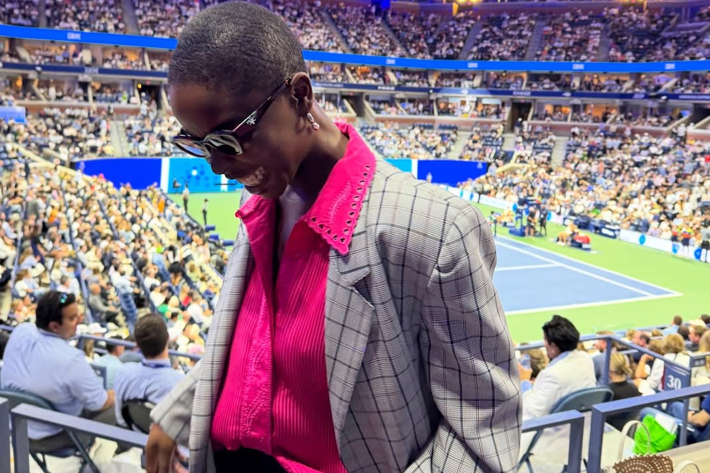
At the US Open, the blue courts aren’t the only stage. The stands are, too—and there’s a quiet showrunner deciding who gets the close-ups. Amanda Wight, who oversees the tournament’s celebrity program, is the behind-the-scenes gatekeeper who determines which boldface names get the best seats and, by extension, which moments do the rounds across social media. Think engineered encounters—like Coco Gauff crossing paths with Simone Biles.
The US Open plan
This year, the USTA formalized a parallel machine: a creator-credential program that brings roughly 50 fashion, lifestyle, food, and entertainment creators courtside to produce organic BTS content. The objective isn’t just to rack up followers; it’s to juice total engagement around the US Open. The USTA points to a record 2.3 billion engagements on official platforms last year as proof the strategy works—and they want more of it!
If Wight is the concierge for celebrity culture, the creators are the everyday narrators who translate the US Open into style posts, GRWMs, fit checks, and snack reviews. Together, they widen the entry points into tennis: you can arrive for Naomi Osaka’s return, stay for the Honey Deuce, then share the outfit you wore to Arthur Ashe. That breadth is by design. USTA marketing’s top brass is explicit about wooing younger audiences and extending the event’s cultural footprint well beyond match highlights.
The gains
The strategy also serves the business. Every celebrity sighting is a headline; every creator’s reel is a distribution node. That attention can be packaged for partners: hospitality moments in suites, brand integrations, and content franchises that live on after the last ball. Industry reporting describes the US Open as a magnet for Hollywood, media, and the business elite—rivaling the Super Bowl for who’s in the building and who’s doing deals. USTA executives say they proactively pitch publicists with the tournament’s global reach in mind, then work to amplify those appearances across platforms.

via Usta
Credits: Linkedin / Amanda Wight, USTA
Fashion is the accelerant. Landing in New York during Fashion Week, the U.S. Open has become a runway with a scoreboard. Designers dress players and VIPs; brands test capsule collections and pop-ups; the concourses double as street-style shoots. This season’s coverage—from Y-3 drops to Lacoste activations—underscored how the Open now sits at the crossroads of sport and style, giving creators and celebs shared language and giving the USTA endless visuals to circulate.
What brought about the change?
Beauty and lifestyle partners are leaning into creator-led campaigns to tap influencers to host on-site “correspondent” roles or turn fan-centric contests into content. That’s fresh inventory the U.S. Open couldn’t sell a decade ago, and it thrives precisely because the audience expects to participate, not just watch.
Strip away the glitz, and there’s a clear playbook: Curate the guest list, credit the storytellers, connect both to brand objectives, and let the Big Apple do the rest. Wight’s velvet rope plus the USTA’s creator ecosystem has transformed the U.S. Open courtside from a perk into a production line—one that manufactures attention in real time and recycles it into reach, relevance, and revenue once the night session ends.